Utility‑scale battery storage: Key to a stable and sustainable energy future
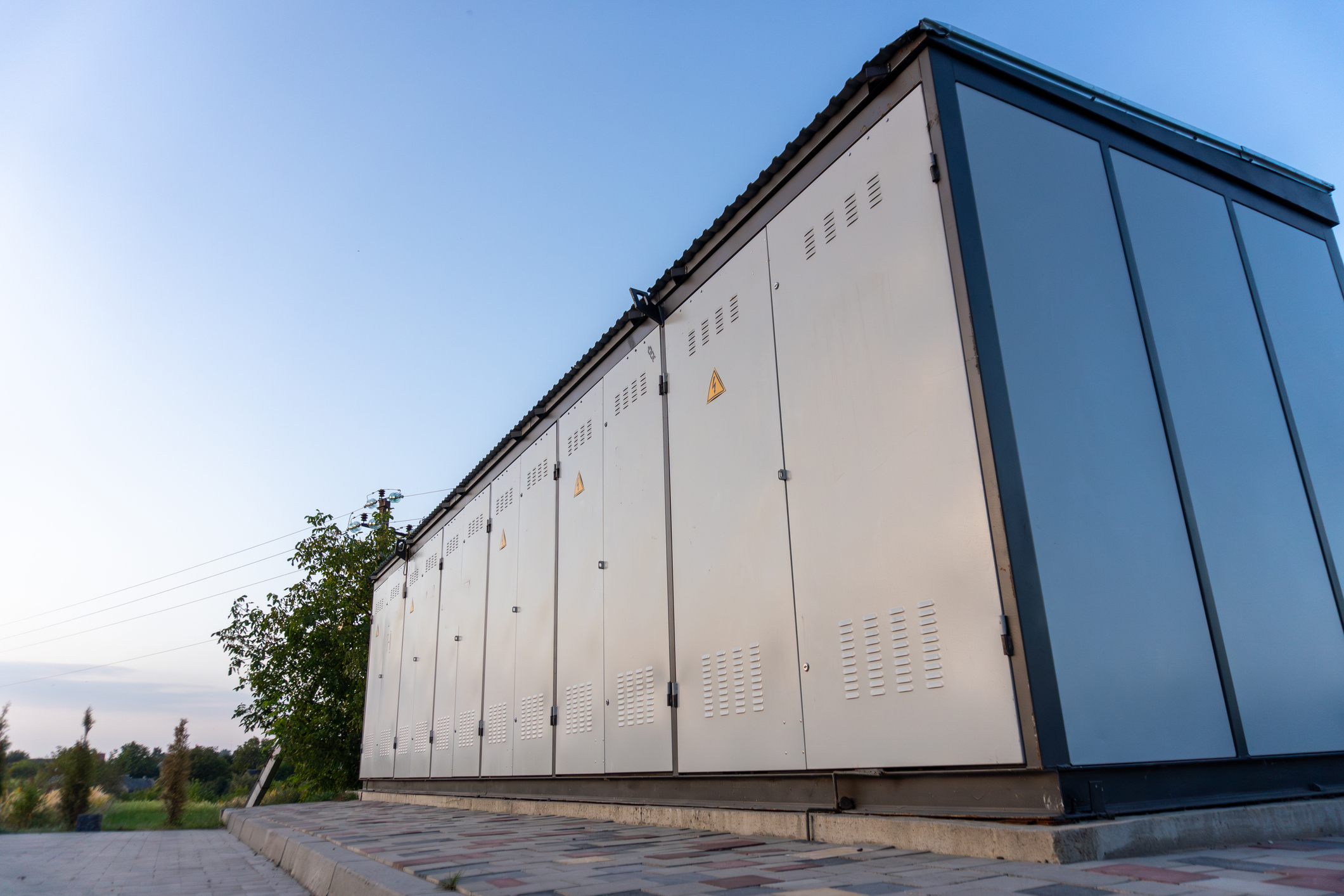
What are utility‑scale battery storage systems, and how do they work?
Utility‑scale battery storage systems are high‑performance energy storage facilities that absorb surplus electricity—especially from renewable sources such as wind and solar—and feed it back into the grid when needed. They react within milliseconds and help balance fluctuations in the power grid. This ensures that energy is reliably available at all times, even when the sun isn’t shining or the wind isn’t blowing.
Advantages of utility‑scale battery storage systems for the power grid and society
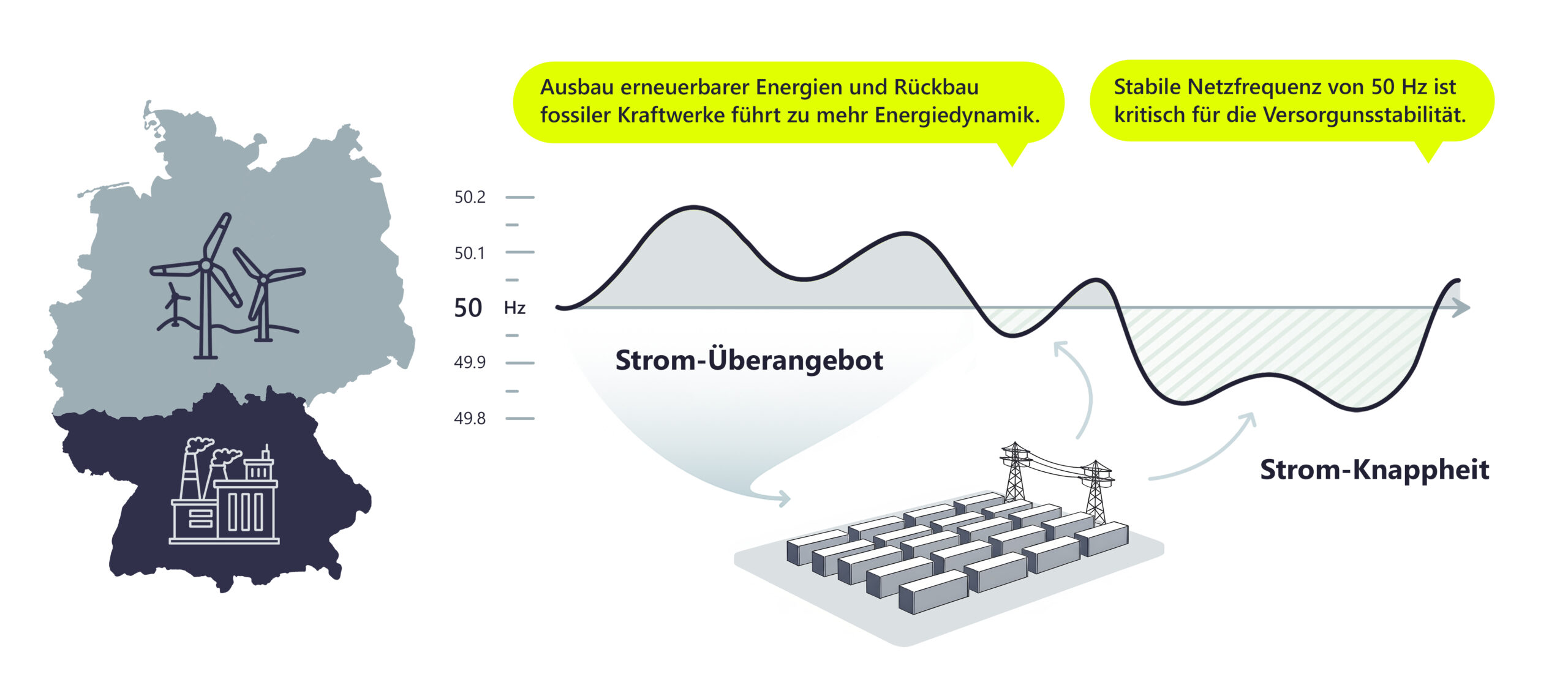
Stability and security of supply
Utility‑scale battery storage systems stabilize the power grid by compensating for short‑term fluctuations and keeping the grid frequency constant. This protects against power outages and makes the grid ready for the energy transition.

Integration of renewable energies
Battery storage systems make it possible to integrate more renewable energy into the grid and ensure that this energy can be used even when it is not being generated.

Economic value
Through the efficient use of electricity and the avoidance of grid bottlenecks, costs are reduced — for grid operators, municipalities, and ultimately also for consumers.

Climate protection and regional value creation
Battery storage systems make a measurable contribution to climate protection and strengthen the regional economy through new projects and job creation.
The most important market mechanisms for battery storage systems
Utility‑scale battery storage systems open up a wide range of opportunities to participate in the energy market and generate revenue. The following mechanisms are particularly essential for grid stability and economic viability.

Grid services (frequency regulation, voltage support)
Battery storage systems provide essential system services such as frequency regulation and voltage support. By doing so, they stabilize the grid in real time and prevent power outages. Operators receive compensation from grid operators for these services — a reliable and predictable revenue stream.

Trading on the electricity market (intraday, day‑ahead, arbitrage)
Utility‑scale batteries purchase electricity when prices are low — for example during periods of high wind and solar generation — and sell it when demand increases. This creates additional revenue streams while simultaneously supporting the integration of renewable energy sources.

Avoidance of grid expansion
By strategically deploying storage systems, grid bottlenecks can be alleviated. This reduces the need for expensive grid expansion projects and postpones investments into the future. In doing so, utility‑scale battery storage systems deliver both economic and environmental benefits.

Flexibility for new business models
Storage systems increase the flexibility of the energy system and open up new business models — from direct marketing and participation in ancillary service markets to innovative energy services for municipalities and businesses.
Challenges and solutions in the grid integration of utility‑scale battery storage systems
The integration of large‑scale battery storage systems into the power grid is complex and requires technical expertise, clear processes, and societal acceptance. The most important challenges and solution approaches are:
Markets and mechanisms in detail
Utility‑scale battery storage systems operate across various markets and play a crucial role in stabilizing the energy system. The following mechanisms illustrate how flexibly storage systems can be deployed.
Utility‑scale battery storage in the ancillary services market
The ancillary services market is the central instrument for ensuring the stability of the power grid. This is where grid‑related power system services are traded that can be made available at short notice to balance fluctuations in the electrical system. Utility‑scale battery storage systems are particularly valuable because they can deliver or absorb energy in a fraction of a second.

FCR – Frequency Containment Reserve
Frequency Containment Reserve is the first line of defense against grid fluctuations. It responds within seconds to frequency deviations and keeps the grid stable. Utility‑scale battery storage systems are ideal for this purpose because they react extremely quickly and help prevent power outages.

aFRR – Automatic Frequency Restoration Reserve
Automatic Frequency Restoration Reserve steps in when Frequency Containment Reserve is not sufficient. It compensates for larger fluctuations and keeps the grid frequency stable over several minutes. Here too, battery storage systems excel thanks to their flexibility and rapid availability.

mFRR – Manual Frequency Restoration Reserve
Manual Frequency Restoration Reserve is activated manually and is used when longer‑term or larger balancing power is required. It can be provided within 15 minutes and is essential for restoring balance to the grid after major disturbances.
Market‑based energy trading
Market‑based energy trading forms the foundation for the economic optimization of power flows. On these markets, energy is traded to balance supply and demand and to make efficient use of price signals. Battery storage systems play a key role here because they can respond flexibly to price changes: they purchase electricity when prices are low and sell it when prices rise. In this way, they not only contribute to grid stability but also unlock additional revenue streams through arbitrage and short‑term trading strategies.

Intraday trading with battery storage systems
In intraday trading, electricity is traded within the same day to balance short‑term fluctuations. Utility‑scale battery storage systems can act flexibly in this market: they purchase electricity when prices are low and sell it when it is needed. This creates additional revenue opportunities while supporting the integration of renewable energy sources.
Trading with battery storage systems on the day‑ahead market
In the day‑ahead market, electricity is traded for delivery on the following day. Operators of battery storage systems can offer their capacities on this market, contributing to planning security and grid stability. Participation in the day‑ahead market is an important revenue driver for storage projects.

Arbitrage as a revenue model for utility‑scale battery storage systems
Arbitrage means taking advantage of price differences in the electricity market: utility‑scale battery storage systems purchase electricity at low prices (e.g., during periods of high wind or solar generation) and sell it at higher prices when demand increases. This makes grid operation more efficient and more economical.
Capacity market and security of supply
The capacity market compensates the provision of firm capacity, regardless of whether it is actually called upon. Utility‑scale battery storage systems receive revenue for being able to supply energy when needed, thereby enhancing security of supply.
FAQ battery storage systems
What is a utility‑scale battery storage system
A utility‑scale battery storage system is a high‑performance energy storage facility capable of absorbing and releasing large amounts of electricity. It is primarily used to store surplus energy from renewable sources such as wind and solar power and feed it back into the grid when needed.
How does a utility‑scale battery storage system work?
The storage systems respond to fluctuations in the power grid within milliseconds. They compensate for frequency deviations, stabilize grid voltage, and ensure that energy remains reliably available at all times — even when wind and solar power are not generating electricity.
What advantages do battery storage systems offer for the power grid?
They increase grid stability, prevent power outages, and enable the integration of more renewable energy. In addition, they reduce costs by avoiding grid bottlenecks and improving overall efficiency.
What role do utility‑scale battery storage systems play in the energy transition?
Battery storage systems are a key enabler of the energy transition: they make renewable energy flexible and usable, ensure security of supply even during periods without wind or sunlight, and actively contribute to climate protection.
How do operators of battery storage systems generate revenue?
Operators generate revenue through various market mechanisms:
- Grid services such as frequency regulation and voltage support
- Participation in the ancillary services market
- Electricity trading on the intraday and day‑ahead markets
- Arbitrage through price differences
- Compensation in the capacity market
What challenges exist in grid integration?
Integrating large‑scale storage systems into the grid requires high technical standards, close coordination with grid operators, and compliance with regulatory requirements. In addition, societal acceptance is essential. This acceptance is strengthened through transparent communication and active dialogue with local communities.
How do utility‑scale battery storage systems contribute to climate protection?
They reduce CO₂ emissions by making renewable energy more usable and by relieving the burden on fossil power plants. At the same time, they promote regional value creation by enabling new projects and creating local jobs.